
So, you've bought an electric vehicle. Or maybe you're seriously considering one.
You've researched the range, compared the models and worked out how much you could save on fuel.
Uncle Macca, meanwhile, is still telling anyone who'll listen that his old lime green Kingswood ute gets him from Moruya to Merimbula just fine, thank you very much. And he's not wrong. But if you're making the switch to electric, there's one thing worth sorting out early.
How are you going to charge it at home?
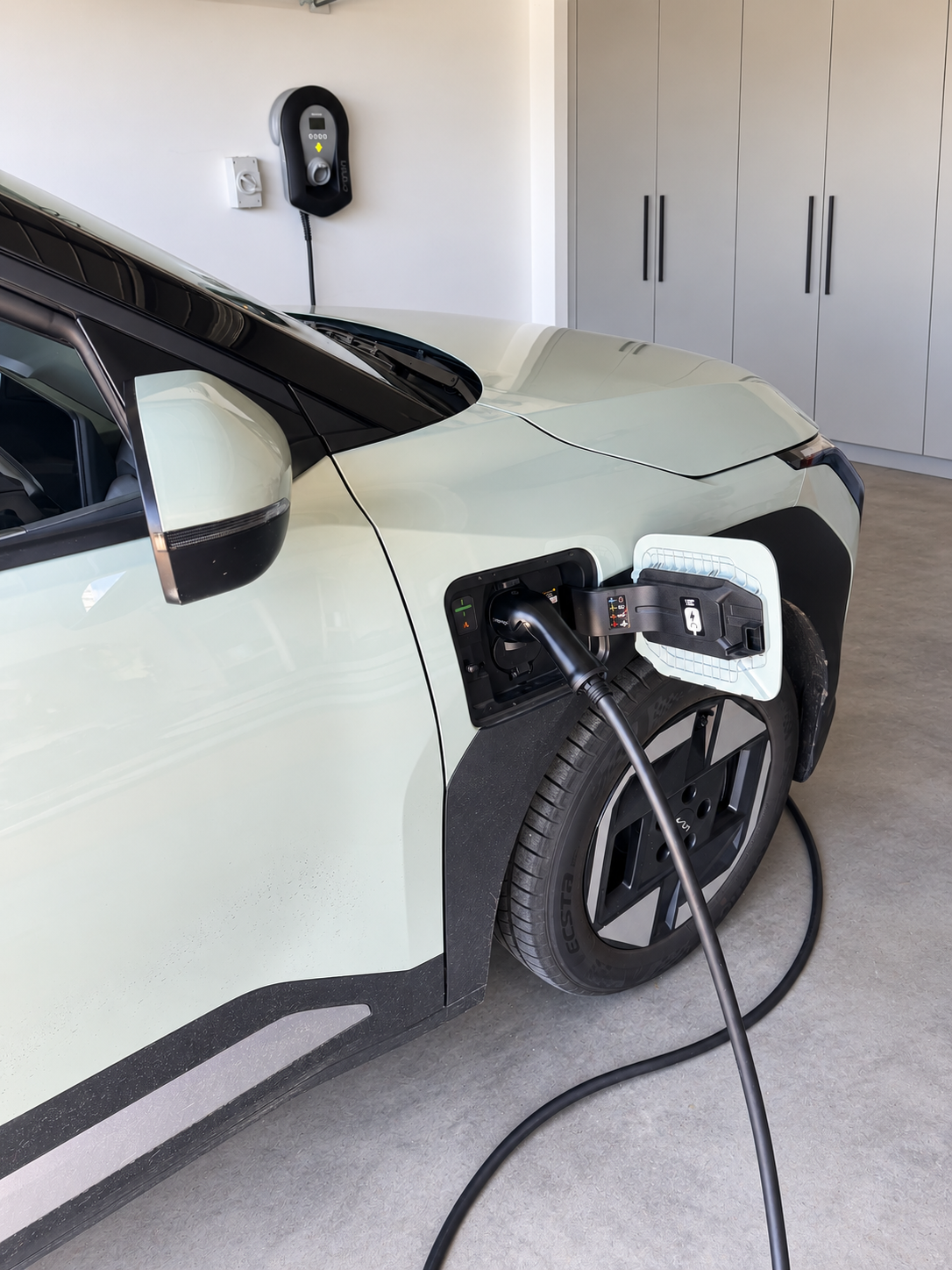
For most EV owners, home charging is one of the biggest conveniences of making the switch. Plug in when you get home, charge while you're sleeping or make the most of your rooftop solar during the day.
Sounds simple enough. And once it's set up properly, it generally is.
But not every home is ready for an EV charger, and not every household needs the same charging setup. Here's what you need to know before installing one.
Can You Charge an Electric Car From a Normal Powerpoint?
Yes, many electric vehicles can charge from a standard household powerpoint using a compatible portable charging cable. This is commonly called trickle charging. It's slower than a dedicated wall charger, but depending on your vehicle and how far you drive each day, it might be enough.
If you only drive short distances around Moruya or Batemans Bay, you may not need the fastest charger on the market.
However, regular EV charging places a sustained load on an electrical circuit. Before relying on an existing powerpoint, it's worth having an electrician assess whether the outlet, wiring and circuit are suitable.
And no, Uncle Macca's idea of running an extension lead out the laundry window and across the driveway keeping clear of his tomato plants isn't an EV charging solution we'd recommend.
Do You Need a Dedicated Home EV Charger?
Not necessarily. It comes down to how you use your vehicle.
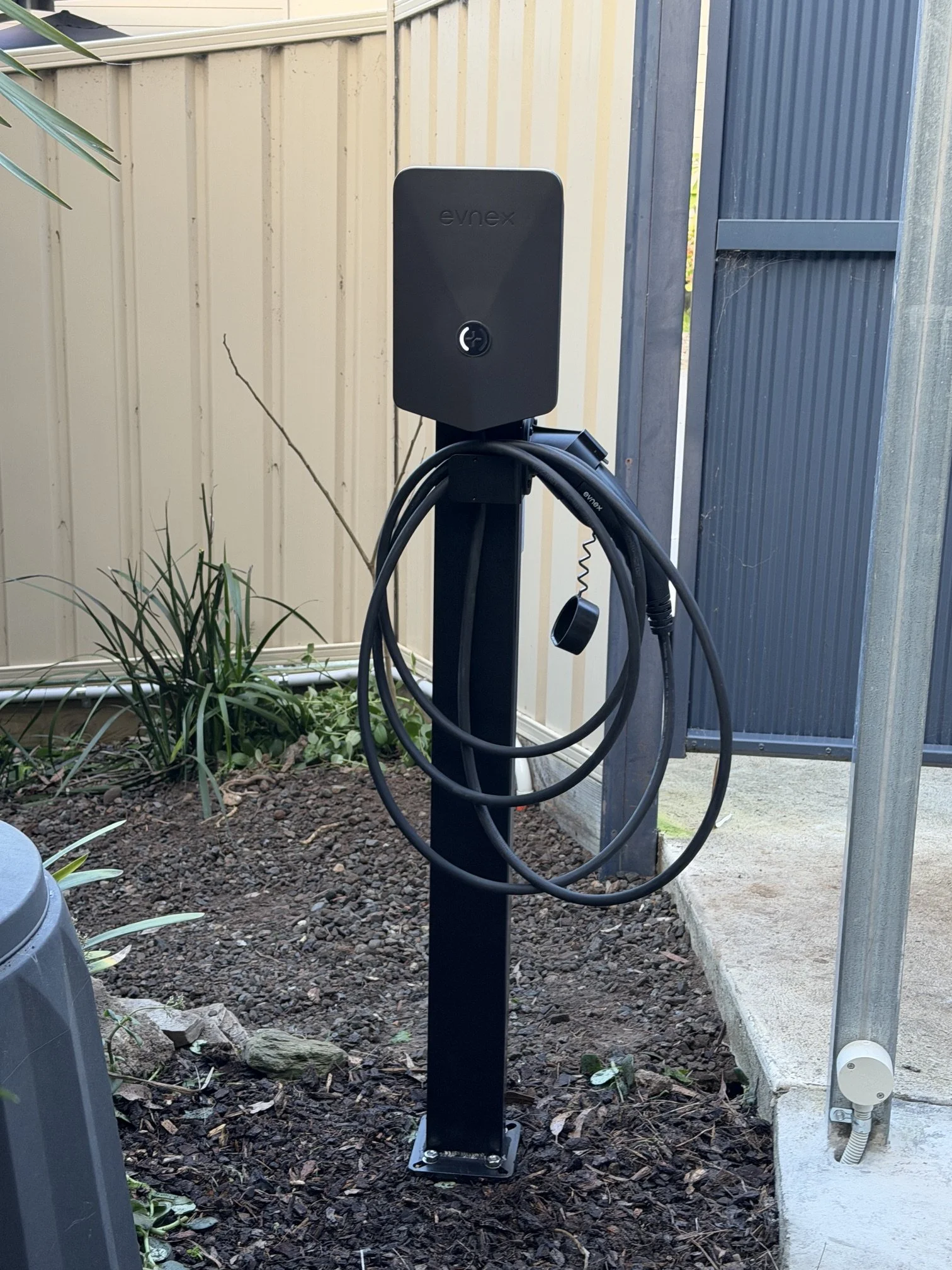
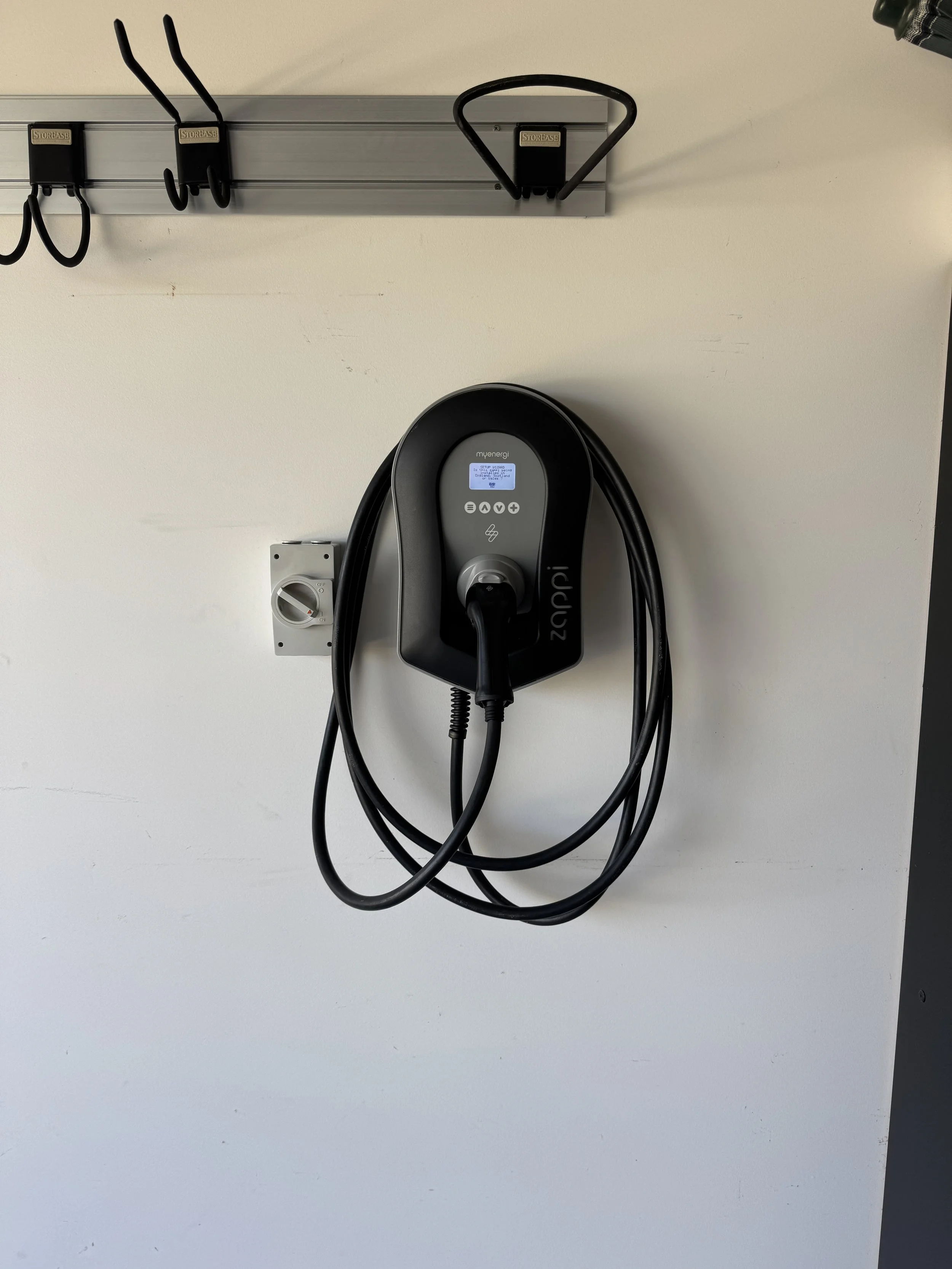
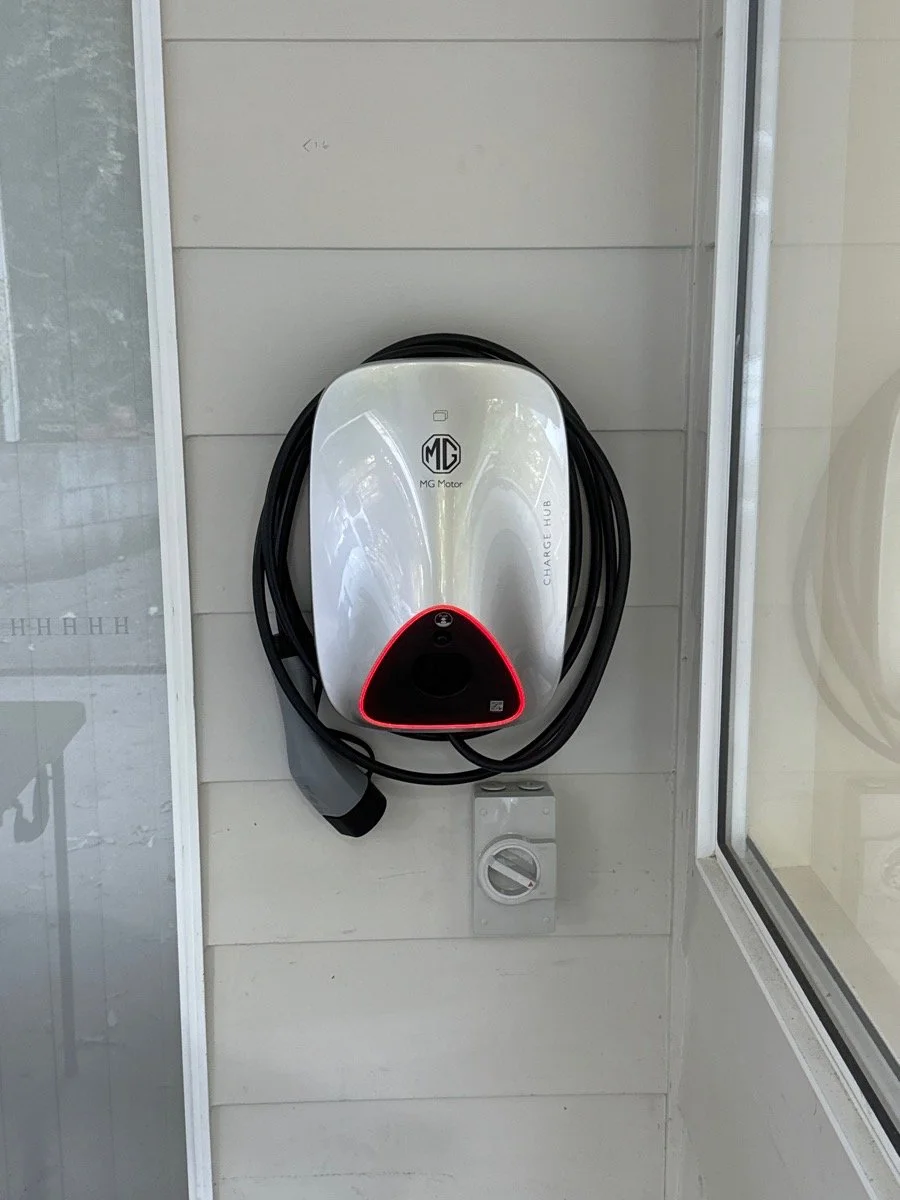
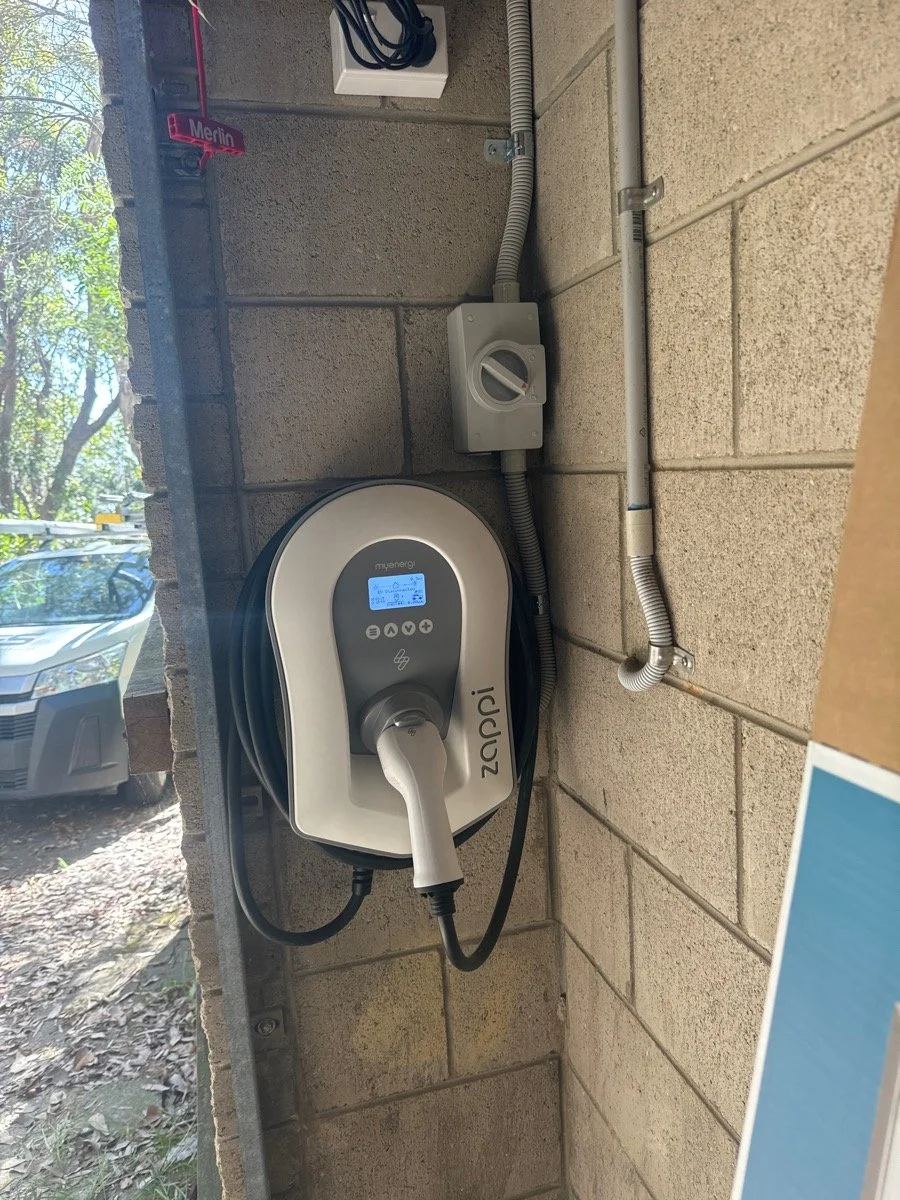
A dedicated wall-mounted EV charger is generally faster, more convenient and can offer additional features such as scheduled charging, energy monitoring and solar integration.
For households with longer commutes, multiple EVs or limited charging time, it can make a big difference.
What's the Difference Between a 7kW and 22kW EV Charger?
When you're shopping for a home EV charger, you'll come across different charging speeds, usually advertised as 7kW, 11kW or 22kW.
Put simply, the higher the kW rating, the more electricity the charger can potentially deliver to your car at once. But that doesn't necessarily mean faster charging.
There are two important things to consider: the electrical supply to your home and how much charging power your vehicle can actually accept.
7kW Chargers – A Popular Choice for Australian Homes
Most Australian homes have single-phase power, which can generally support a 7kW EV charger, provided there's enough electrical capacity available.
For many households, this is more than enough to recharge their car overnight.
11kW and 22kW Chargers – For Homes With Three-Phase Power
If your home has three-phase power, you may have the option of installing a more powerful charger. These chargers can deliver more electricity, but there's a catch. Your car also needs to be capable of accepting that much power.
For example, if your EV can only accept 11kW when charging at home, installing a 22kW charger won't make it charge any faster.
It's a bit like Uncle Macca plugging a bigger pump into his veggie garden irrigation system, only to discover the circuit can't supply enough power. Those prize-winning tomatoes aren't getting watered any faster, Macca.
So, Which EV Charger Should You Choose?
For most households, a 7kW charger is a practical option. But the best choice depends on:
Whether your home has single-phase or three-phase power.
Your vehicle's maximum AC charging capacity.
How far you drive each day and how quickly you need to recharge.
Whether you want to charge using your rooftop solar.
The available capacity of your existing electrical installation.
At Cowley Electrical Services, we assess your home's electrical supply and how you plan to use your EV before recommending a charger. There's no point paying for charging capacity you can't use.
Does Your Home Need a Switchboard Upgrade?
Sometimes, but not always. Before installing an EV charger, we need to consider the electrical capacity of your home.
That includes:
Whether you have single-phase or three-phase power.
The condition and capacity of your switchboard.
The electrical load from other appliances.
The location of the charger and cable route.
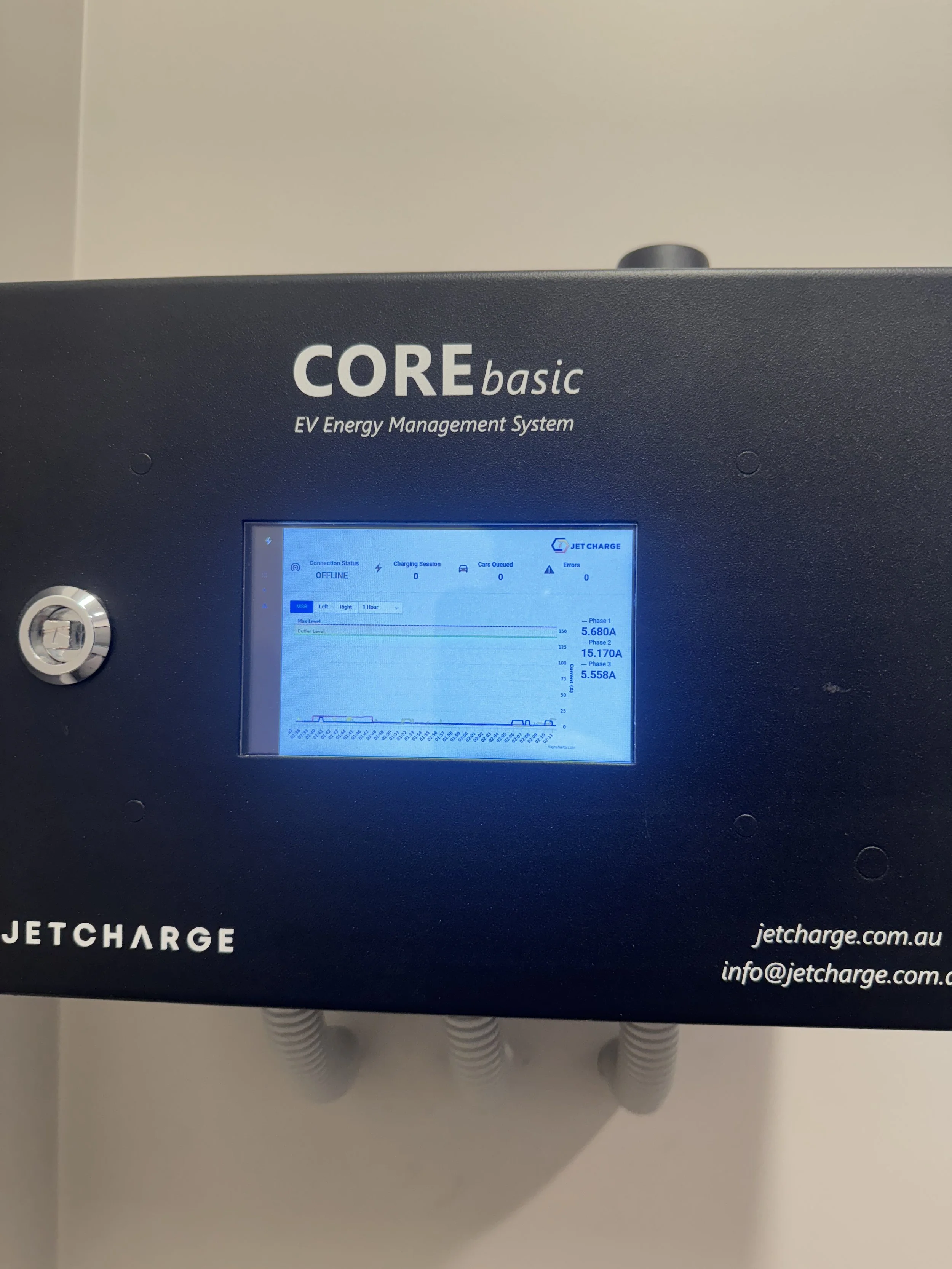
Whether additional circuit protection or load management is required.
An older switchboard may need upgrading, but that isn't something we automatically recommend just because you're installing an EV charger.
We assess the installation first.
Some smart chargers can also manage their charging output based on how much electricity the rest of your home is using. This can be useful where supply capacity is limited.
If the property needs a supply upgrade involving the electricity network, additional approvals and an appropriately accredited service provider may be required.
Can You Charge Your EV Using Solar Power?
Absolutely, and this is where things get interesting.
If you already have rooftop solar, an appropriately configured smart EV charger may allow you to use surplus solar generation to charge your vehicle.
Instead of exporting all your excess solar electricity to the grid, you can potentially put some of it straight into your car.
Uncle Macca might still be suspicious of anything that doesn't need a trip to the servo, but charging your car using electricity generated on your own roof is a pretty clever use of solar.
There are a few things to consider, though.
Your Car Needs to Be Home When the Sun Is Shining
Sounds obvious, but it's worth thinking about.
If your car is parked at work all day, you'll have fewer opportunities to charge directly from your solar panels during peak generation hours.
You may find scheduled off-peak charging works better for your routine.
Not Every EV Charger Has the Same Solar Features
Some chargers support solar-aware charging, while others need additional monitoring equipment or compatible hardware.
The right setup depends on your existing solar system, charger and how you want to use them.
A Battery Isn't Essential
You don't need a home battery to charge an EV using solar.
A battery may offer additional flexibility, but whether it makes financial sense depends on your household's energy use, electricity tariff, solar generation and charging habits.
We'd rather help you choose a setup that suits how you actually live than sell you every bit of technology available.
Where Should You Install Your EV Charger?
Most home chargers are installed in a garage, carport or another suitable location near the vehicle's regular parking spot.
But location matters.
Think about where the charging port sits on your car, whether you park nose-in or reverse-in, and whether the cable can reach without becoming a trip hazard.
For outdoor installations, the charger's weather rating, exposure and mounting position also matter.
Here on the South Coast, salt air and coastal conditions are worth considering when selecting equipment and planning an installation.
And if you're building or renovating, it's worth discussing EV charging early. Planning the wiring before the walls are finished can save a lot of mucking around later.
How Much Does It Cost to Install an EV Charger?
There's no single price that applies to every home. Installation costs depend on the charger you choose, the distance from the switchboard, cable routing, available electrical capacity and whether any additional electrical work is required.
A straightforward installation close to a suitable switchboard is very different from running new cabling across a large property or upgrading an older electrical installation.
We recommend assessing the site and understanding your charging needs before recommending equipment or providing a price.
What About EV Chargers for Businesses and Holiday Accommodation?
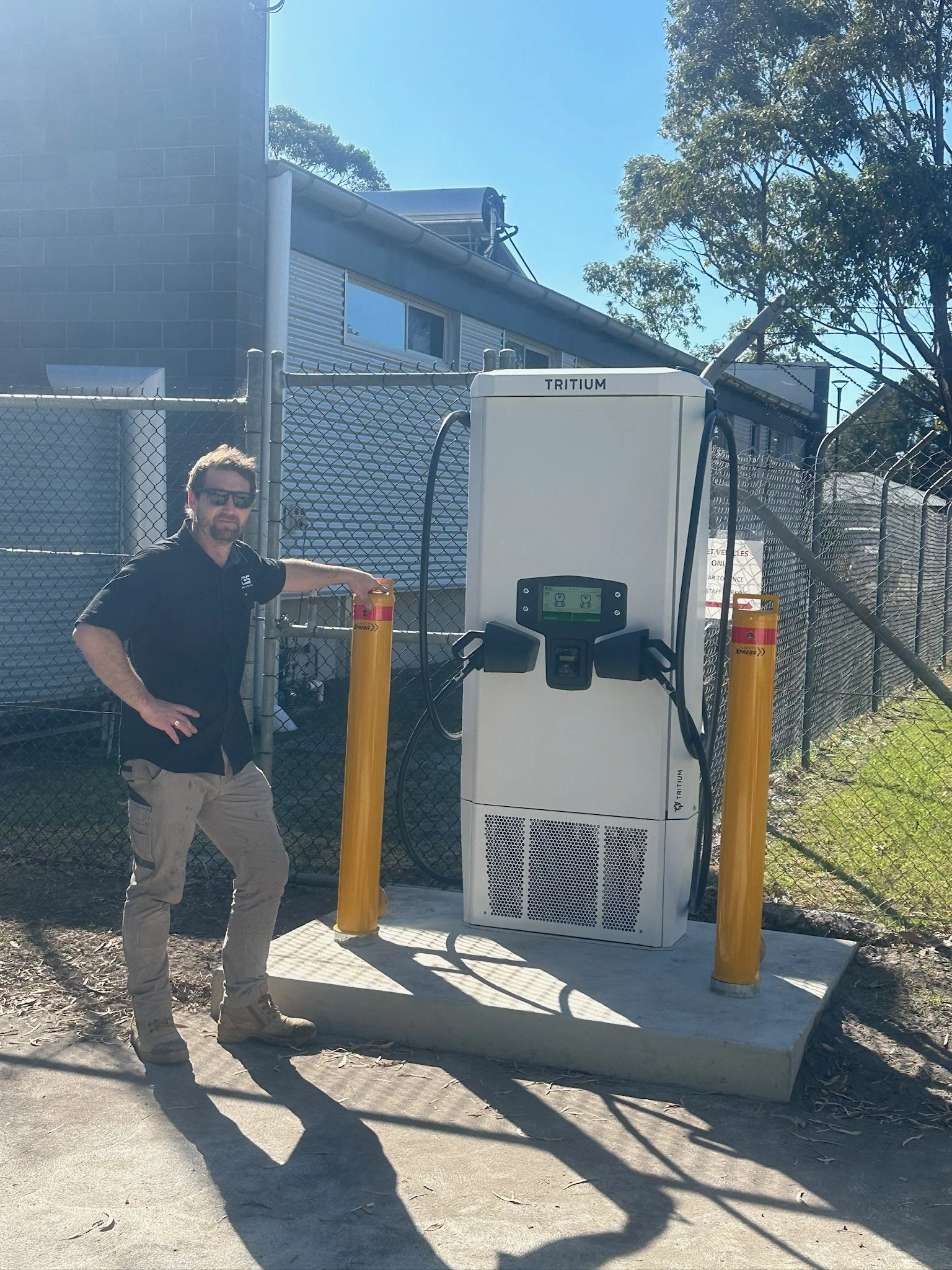
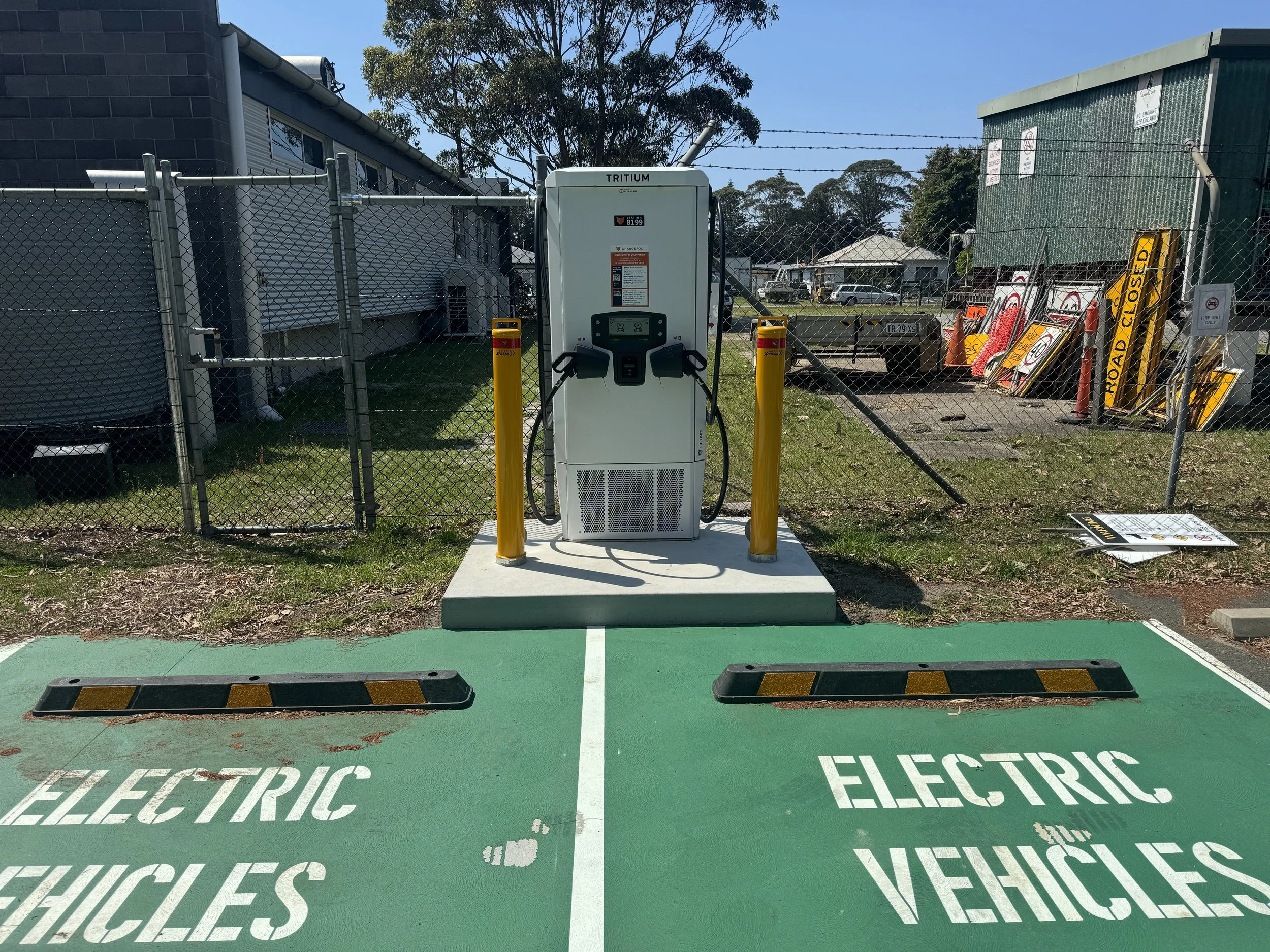
Home charging isn't the only opportunity. EV charging can also be useful for workplaces, accommodation providers and commercial properties across Eurobodalla.
For businesses, the right setup depends on who uses the charger, how long vehicles are parked, the available electrical capacity and whether charging needs to be monitored or billed.
For holiday accommodation, it may be an additional convenience for guests travelling the South Coast in an EV.
The same principle applies: start with how the charger will be used, then choose the equipment.
Thinking About Installing an EV Charger?
Whether you've already got an EV in the driveway or you're planning ahead, we can help you work out a charging setup that makes sense for your home, vehicle and electricity supply.
We're local electricians who work across everyday electrical maintenance, solar, batteries and EV charging, so we can look at the bigger picture rather than just the charger on the wall.
Call us on 0411457441 or click the button below to send us an online enquiry.
-
No. Many homes use single-phase power and can accommodate a suitable EV charger. Three-phase power can provide additional charging capacity, but isn't essential for most home installations.
-
No. A fixed home EV charger must be installed by a licensed electrician in NSW. The electrical installation needs appropriate circuit protection, testing and compliance documentation.
-
A properly licensed electrician can carry out electrical installation work within their scope, but EV charging involves specific technical requirements. It's worth choosing an electrician familiar with charger compatibility, circuit protection, load management and commissioning.
-
It depends on the battery size, how much charge you need, the vehicle's AC charging capability and the power available from your charger. A dedicated wall charger can be considerably faster than a standard powerpoint.
-
Can I use my existing solar panels to charge my EV?
Yes. Depending on your setup, you can charge your EV while your solar system is generating electricity. A compatible smart charger may help prioritise surplus solar generation.
-
Not always. An electrician needs to assess your existing switchboard and electrical capacity before determining whether upgrades are necessary.
-
Yes. Cowley Electrical Services provides EV charger installation and electrical solutions for homes and businesses across Moruya, Batemans Bay, Narooma and surrounding Eurobodalla areas.