
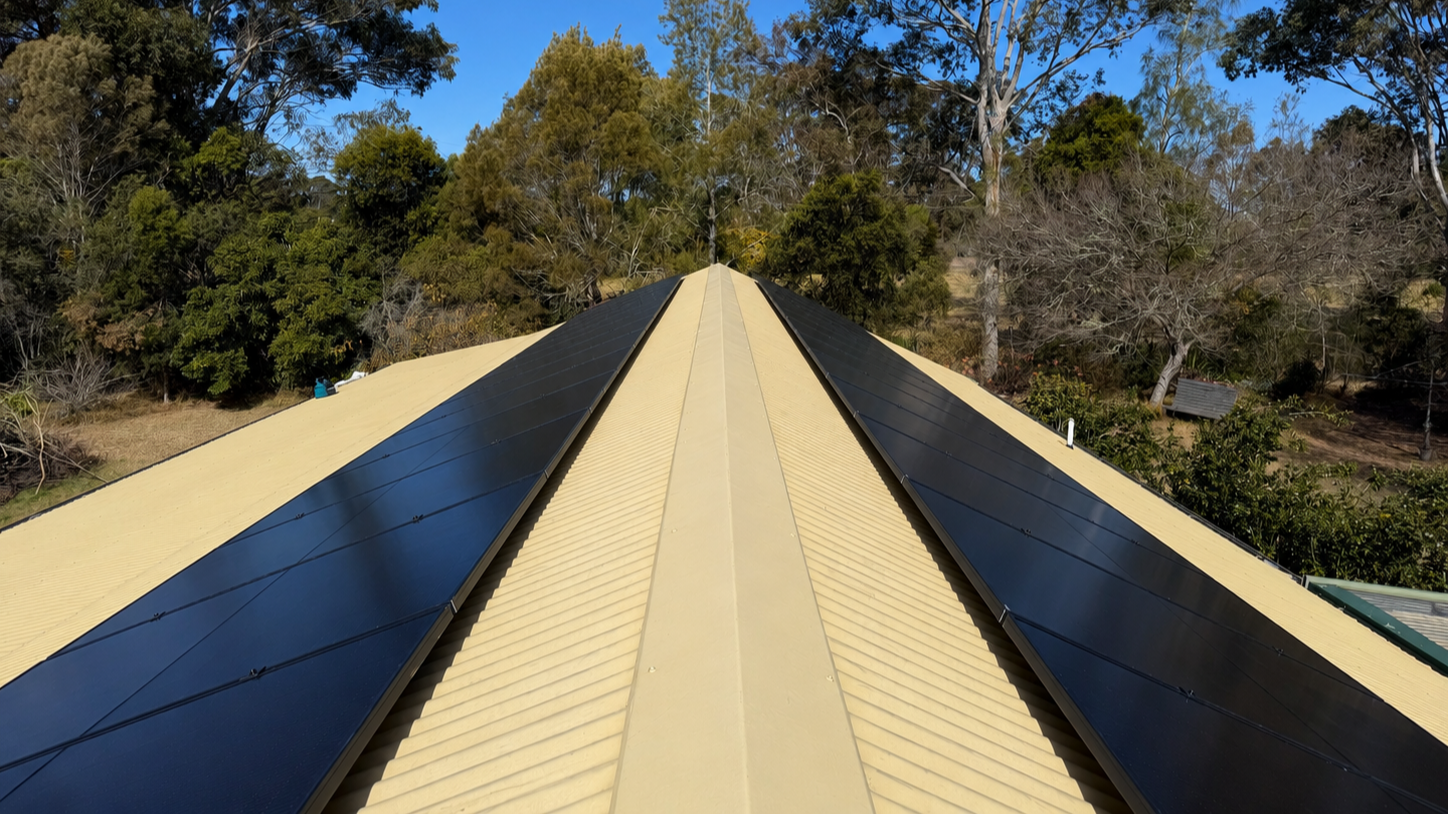
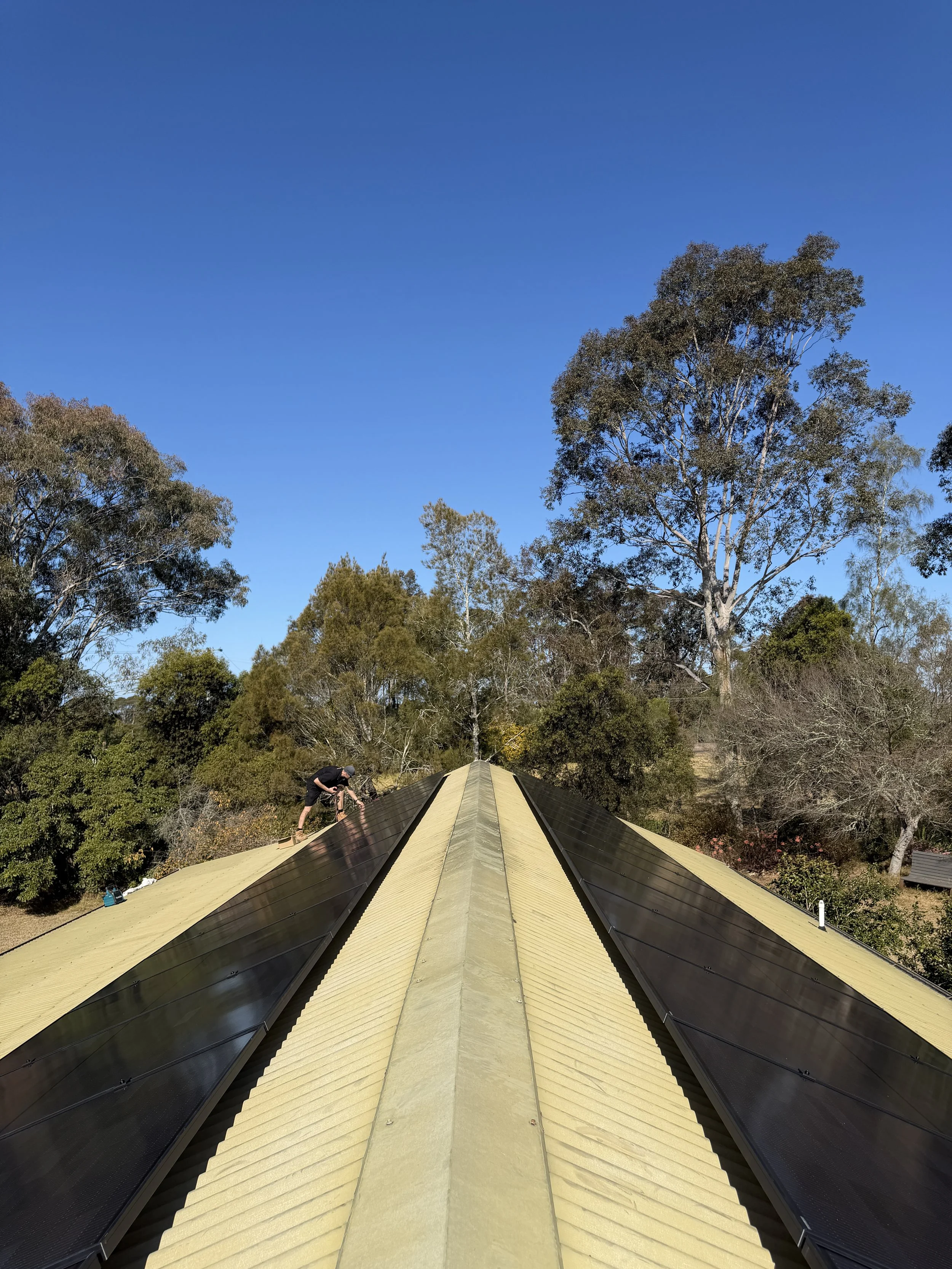
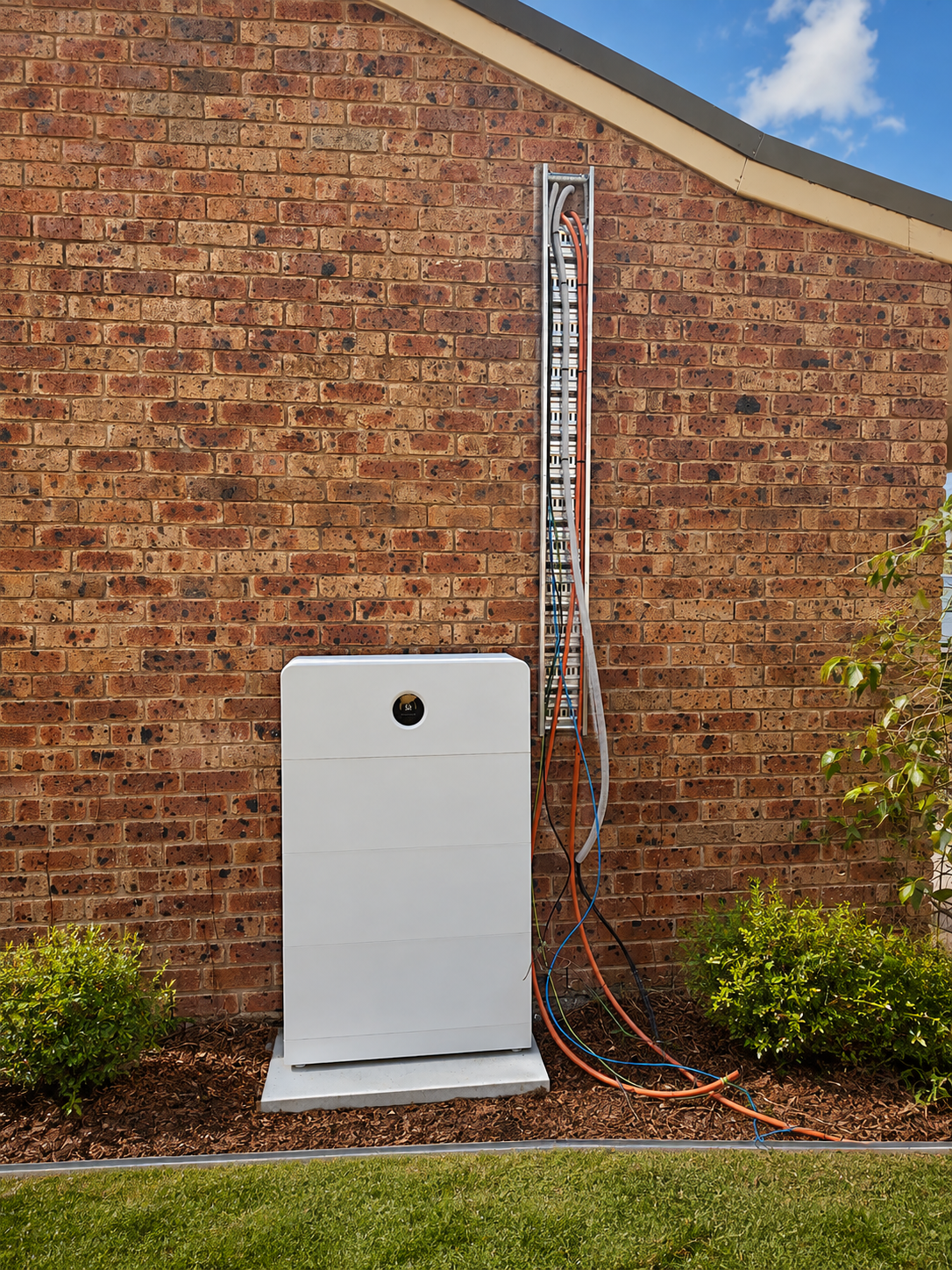
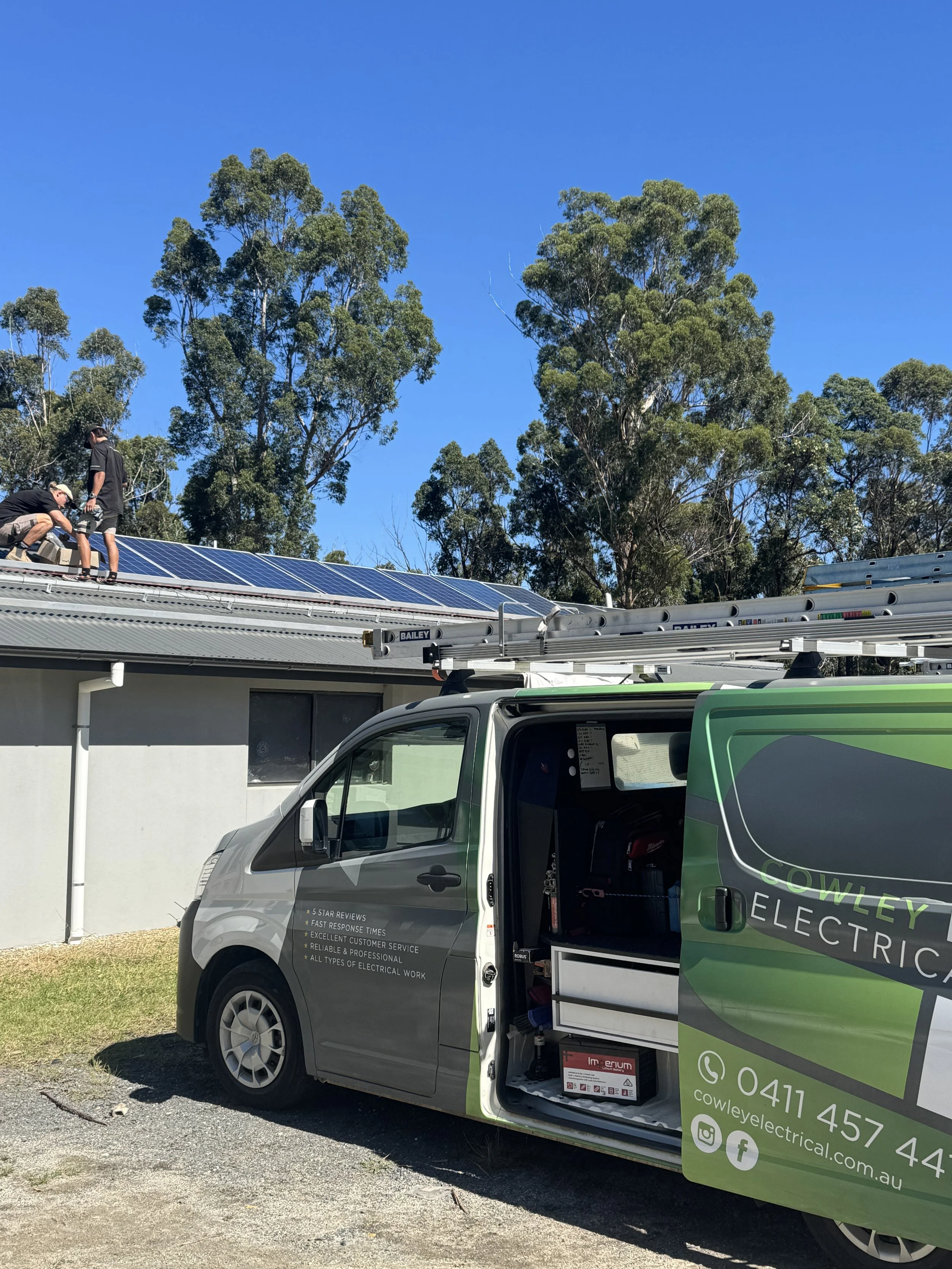
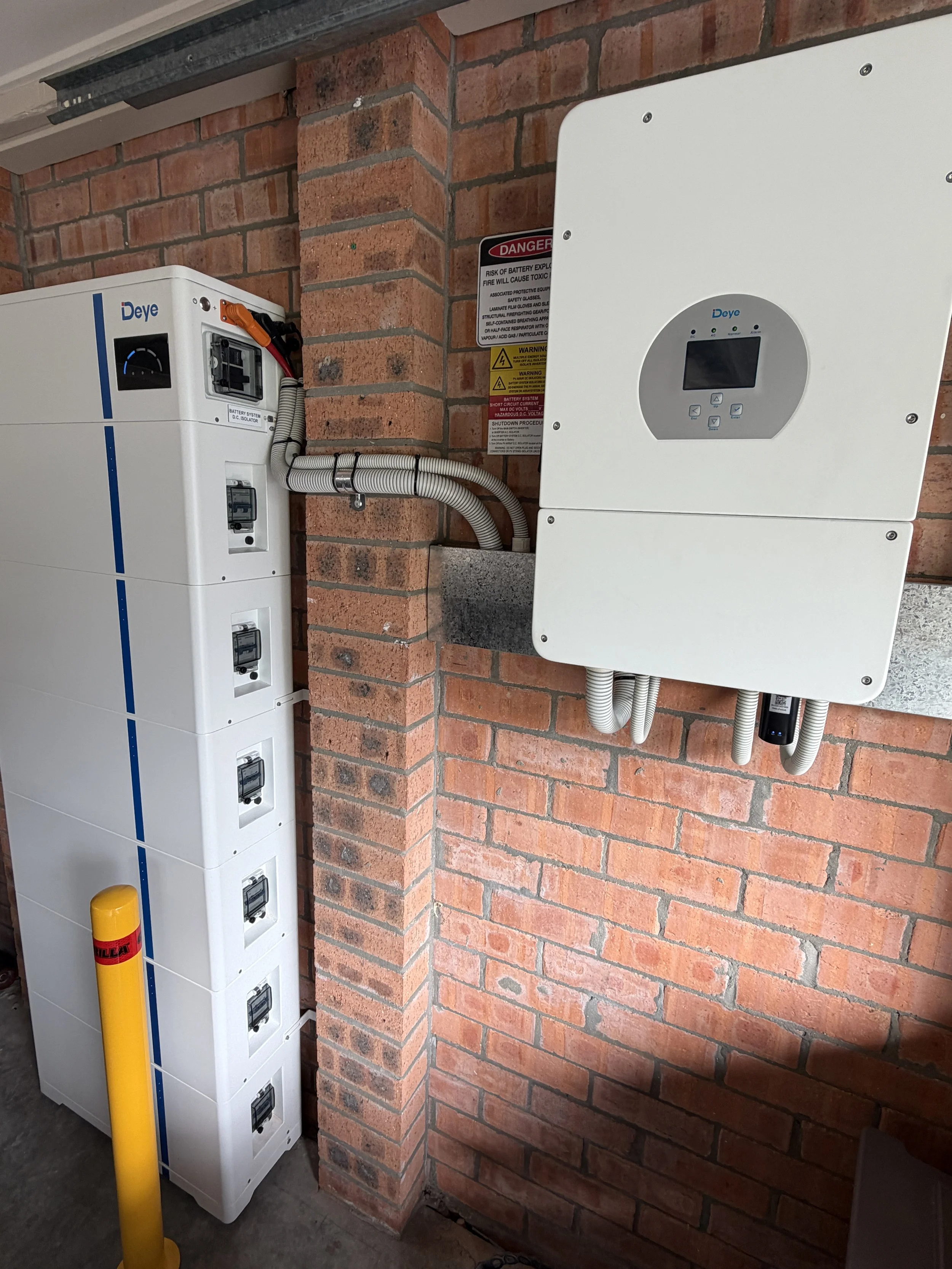
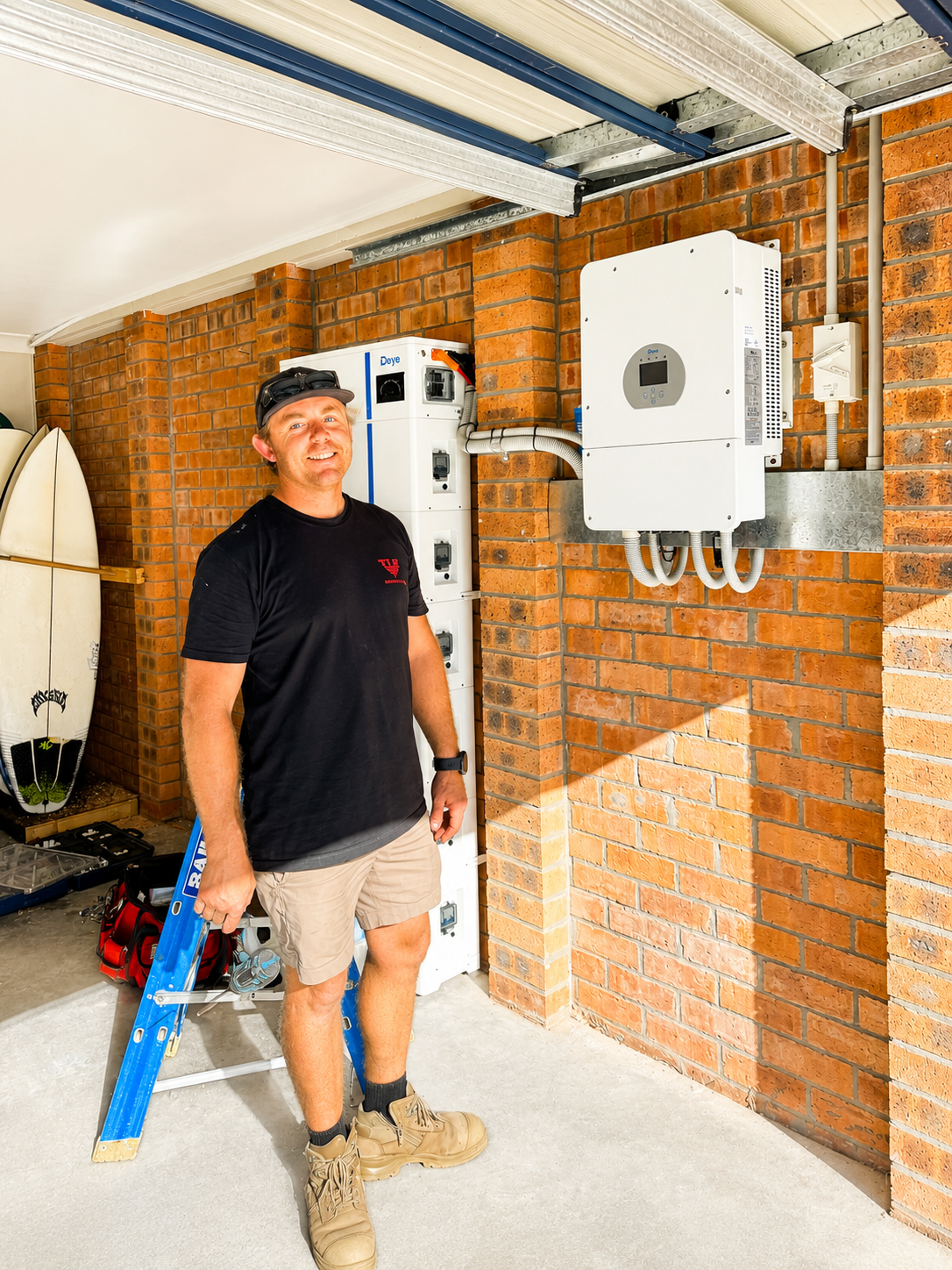
Installation of new 13.3kw Solar System along with a battery and Evnex EV Charger
Solar Panels, Batteries & Smarter Energy for Eurobodalla Homes
With electricity prices putting pressure on household budgets and solar and battery technology continuing to improve, more Batemans Bay homeowners are looking for ways to take control of their energy costs. And with plenty of sunshine here on the Eurobodalla coast, it's easy to see why solar is getting so much attention.
But before you start covering every available inch of your roof in panels, there's something worth knowing: the biggest solar system isn't necessarily the best solar system for your home.
Getting solar right means understanding how your household uses electricity, what you want to achieve and how the technology works together. And with batteries, EV chargers and backup power now part of the conversation, there's a little more to consider than there used to be.
At Cowley Electrical Services, we help homeowners and businesses across Batemans Bay and the Eurobodalla make sense of their energy options. No confusing sales pitch, no one-size-fits-all packages. Just practical advice from local electricians who understand the bigger electrical picture.
Is solar worth it in Batemans Bay?
For many South Coast households, solar can be a worthwhile investment. But whether it makes financial sense for you depends on more than how much sunshine lands on your roof.
Solar panels generate electricity during daylight hours, allowing you to use that energy in your home rather than purchasing it from the grid.
The trick is matching your solar generation with your household's electricity consumption.
For example, if you're home during the day, running appliances, working from home or heating your pool, you may be able to use a good portion of the electricity your panels generate.
If everyone's out all day and the household comes alive at 6 pm, the equation looks a little different.
Neither situation rules out solar. It simply means the system needs to be designed around how you actually live. It's also worth remembering that estimated solar savings are just that - estimates. They're based on assumptions about your electricity usage, system performance and electricity tariffs. Your actual savings can vary as your household habits, electricity prices and operating conditions change over time.
Before recommending a system, we look at:
Your electricity bills and usage patterns.
Your roof's orientation, available space and shading.
Your existing switchboard and electrical infrastructure.
Whether you plan to add a battery or EV charger.
Your budget and what you want the system to achieve.
Your property's future energy requirements.
Because the goal isn't to sell you the most panels. It's to design a system that makes sense for your property.
Solar panels are only part of the picture
Once upon a time, the solar conversation was pretty straightforward: put panels on the roof, generate electricity and send whatever you don't use back to the grid.
These days, there's more to think about. Modern home energy systems can combine solar panels, inverters, battery storage, energy monitoring, EV charging and backup power.
Each component has a different job, and the way they work together can make a real difference to how effectively you use the energy you generate.
Solar panels
Solar panels convert sunlight into electricity. The amount they generate depends on factors including panel capacity, roof orientation, shading, weather conditions and system performance.
Solar inverters
Your inverter converts the electricity generated by your solar panels into electricity your home can use. Inverter selection matters because it influences system compatibility, monitoring capabilities and options for future upgrades.
Battery storage
A home battery can store excess solar electricity for use later. Some systems can also charge from the grid, for example during cheaper off-peak electricity periods. Whether this is beneficial depends on your electricity tariff, battery capabilities and how the system is configured.
Energy monitoring
Monitoring systems help you understand when you're generating, consuming, importing and exporting electricity. Sometimes the most useful energy upgrade starts with understanding where your electricity is going.
Should you add a battery to your solar system?
This is one of the biggest questions we're hearing from South Coast homeowners. And the answer? It depends. Not terribly exciting, we know, but it's better than telling everyone they need the same shiny battery.
A home battery can store electricity generated by your solar panels during the day and make it available later. That can help reduce the amount of electricity you purchase from the grid, particularly during evening periods. But batteries aren't automatically the right financial decision for every household. Their value depends on your electricity consumption, solar generation, electricity tariffs, battery capacity, installation costs and how the system is configured.
For some households, adding a battery makes sense. For others, improving how they use their existing solar electricity may be a more sensible first step.
And sometimes it's worth planning for a battery in the future rather than installing one immediately. We'd rather help you make an informed decision than sell you equipment you don't need.
Will solar panels and batteries keep the lights on during a blackout?
Here's a question that's particularly relevant to those of us living on the South Coast.
Between summer storms, bushfire risks and the occasional grid outage, we know electricity isn't always something we can take for granted. And when the power goes out, the last thing you want is to discover your shiny new solar system can't even keep the fridge running.
Here's what surprises many homeowners: most standard grid-connected solar systems automatically shut down during a blackout.This is an important safety measure that prevents your system from feeding electricity back into the grid while network crews may be working to restore power. And adding a battery doesn't automatically mean your home will have electricity during an outage either.
To keep the power on during a blackout, your system needs to be specifically designed and configured for backup power. This generally involves compatible equipment, appropriate electrical protection and a backup arrangement that safely disconnects from the grid.
Some specially designed solar systems can also provide limited power during an outage without a battery, but this isn't a standard feature.
Depending on your system, backup power may supply only selected circuits rather than your entire home. How long it lasts depends on factors such as battery capacity, available stored energy, the appliances you're running and whether your system can continue generating solar electricity during the outage.
For many households, the priority is keeping the essentials running like the fridge, some lights, internet and perhaps a water pump. Other households may have different requirements, including equipment that needs a reliable power supply.
If blackout protection matters to you, it's worth having that conversation before choosing your solar and battery system.
We can help you explore suitable battery backup options and understand what's involved, including which appliances or circuits you want to prioritise. Because there's a big difference between having solar panels on your roof and having a system designed to keep essential power available when the grid goes down.
What size solar system do you need?
You'll often see solar systems advertised by size, such as 6.6 kW, 10 kW or 13.2 kW. But what do those numbers actually mean?
The kilowatt (kW) rating describes the system's generating capacity under specified test conditions. It doesn't mean the system produces that amount of electricity continuously throughout the day. Actual electricity generation varies with sunlight, temperature, shading, orientation, equipment and other conditions.
A larger system can generate more electricity under suitable conditions, but that doesn't automatically make it the most economical choice.
If your household exports a significant amount of electricity at a relatively low feed-in tariff, the financial outcome may differ from a household that uses most of its solar generation directly.
Network export limits can also influence system design. That's why we consider your electricity usage, available roof space, existing infrastructure and future plans before recommending a system size.
Uncle Macca might reckon the answer is simple: fill the roof with as many panels as you can fit and she'll be right. But bigger doesn't automatically mean better value, particularly if you're exporting most of that extra electricity back to the grid for a relatively small return. A good solar design starts with the numbers that matter to your household, not simply the biggest package on the price list.
What about government solar and battery rebates?
The good news? Government incentives can help bring down the upfront cost of installing solar panels and battery storage. The slightly less exciting news? There are eligibility rules, and not every system qualifies.
For solar panels, the Australian Government's Small-scale Renewable Energy Scheme provides financial incentives for eligible installations through Small-scale Technology Certificates (STCs). These are commonly assigned to a registered agent in exchange for an upfront discount on the installation price.
For batteries, the Australian Government's Cheaper Home Batteries Program provides an upfront discount on eligible battery installations, also through the STC scheme. The value of the incentive depends on factors including the battery's usable capacity, installation date and applicable program rules.
Importantly, the battery incentive isn't a fixed dollar rebate, and the level of support changes over time. Eligibility also depends on meeting the program's equipment and installation requirements.
At Cowley Electrical Services, we can explain which incentives may apply to your proposed system, any relevant eligibility conditions and how the discounts are reflected in your quotation.
And if you've seen an advertisement promising a 'free government battery', it's worth reading the fine print. A government incentive can make a battery more affordable. It doesn't automatically make it free.
Already have solar? You might not need to start again
If you've had solar for several years, you might be wondering whether it's time to upgrade. Perhaps your electricity usage has increased, you've purchased an electric vehicle or you're interested in adding battery storage.
The good news is that an existing solar system doesn't always need to be replaced to accommodate changing energy needs.
Depending on the equipment, system age, compatibility and electrical infrastructure, there may be options to add battery storage, improve monitoring or make other upgrades. Sometimes an older system may have limitations that make replacement or a different configuration more practical.
We can assess what's already installed and discuss the available options before recommending any changes.
Solar and EV charging: A smart combination?
If you're considering an electric vehicle, it's worth including EV charging in your solar plans.
Charging an EV adds to your household's electricity consumption, but it can also create opportunities to use more of the electricity generated by your solar panels. Some compatible EV charging systems can adjust charging behaviour based on available solar generation, helping you make better use of excess electricity. Of course, whether that's practical depends on when your vehicle is at home, how much energy it needs and your solar generation.
If you're building or renovating, planning for EV charging early can also help avoid unnecessary electrical modifications later. You don't need to own an EV today to think about where tomorrow's charger might go.
Choosing a solar installer in Batemans Bay: What should you look for?
Solar is a significant investment, and the quality of the design and installation matters.
Before choosing an installer, it's worth asking a few questions.
1. Does the system suit your property?
Be cautious of recommendations made without properly considering your electricity consumption, roof conditions, switchboard and future requirements.
2. Are the savings estimates realistic?
Ask what assumptions are used to calculate estimated savings, including electricity tariffs, household consumption, solar generation and feed-in rates.
Savings estimates are projections, not guarantees.
3. What equipment is included?
Understand the proposed panels, inverter, battery (if applicable), warranties and any limitations.
4. What's included in the installation price?
Check whether switchboard upgrades, metering arrangements, network requirements and other necessary work are included or may incur additional costs.
5. What happens after installation?
Ask who to contact if something isn't working, how warranty issues are handled and what ongoing support is available.
And one more thing: don't assume the cheapest quote represents the best value.
Two solar quotes can look similar on paper while including very different equipment, electrical work, installation requirements and after-sales support.
6. Has the quote been prepared following a site inspection?
A solar quote prepared without a site inspection isn't necessarily a red flag, but it's worth asking how the installer has assessed your property.
Satellite imagery and electricity bills can provide a useful starting point, but they don't always reveal the full picture. Your switchboard condition, roof access, shading, cable routes and existing electrical infrastructure can all affect the system design and installation cost.
Ask whether a site inspection is included before the quote is finalised, and whether any additional electrical work or potential costs have been identified.
A cheaper quote can look pretty attractive — until unexpected extras start appearing.
Why choose a local electrician for solar in Batemans Bay?
There's a lot to be said for dealing with someone who'll still be around when you need them.
Cowley Electrical Services is a family-run electrical business established in 2016 and based in Moruya, servicing Batemans Bay, Broulee, Mossy Point, Tomakin, Tuross Head, Narooma and the wider Eurobodalla.
We're electricians first, which means we look at solar as part of your property's complete electrical system.
From the switchboard and existing wiring to future battery storage, EV charging and backup power, we consider how the different pieces fit together. And because we also work across residential, commercial and property maintenance, we're here for more than the initial installation.
From installation to troubleshooting and ongoing support, we're here when you need us, long after the panels are on your roof.
That's important to us. We live and work in the same communities as our customers, and we'd quite like to keep bumping into you at the beach or grabbing a coffee without having to hide behind the nearest pot plant.
-
For many Batemans Bay households, solar can be a worthwhile investment, particularly if you use a good portion of the electricity your panels generate.
But there's no one-size-fits-all answer. The financial benefits depend on your electricity consumption, system size, installation costs and electricity tariffs. A properly designed system considers how and when you use electricity, rather than simply putting as many panels as possible on your roof.
-
The cost of a solar system depends on its size, the equipment selected, your roof and installation requirements, and whether additional electrical work is needed.
Government incentives may help reduce the upfront cost of eligible installations. At Cowley Electrical Services, we assess your property and energy requirements before recommending a system and preparing a detailed quotation, so you understand what's included.
-
That depends on how much electricity your household uses, when you use it, your available roof space and whether you're considering a battery or electric vehicle.
A bigger system isn't automatically a better investment. We look at your electricity usage, property and future plans to help determine an appropriate system size.
-
Solar can significantly reduce the amount of electricity you purchase from the grid, but it doesn't necessarily eliminate your electricity bill.
You may still pay daily supply charges and purchase electricity when your panels aren't generating enough to meet demand. Actual savings depend on your energy consumption, system performance and electricity tariffs, which can change over time.
-
No. Solar panels can operate without a battery, and many households benefit from using solar electricity directly during daylight hours.
A battery allows you to store some of your excess solar generation for later use, such as during the evening. Whether it's worth adding one depends on your electricity usage, tariffs, budget and what you want to achieve.
-
Not necessarily. Most standard grid-connected solar systems automatically shut down during a power outage for safety reasons.
Even with a battery, backup power isn't guaranteed unless the system has suitable equipment and is specifically configured for it. Some systems can power selected essential circuits during an outage, subject to available stored energy and operating conditions.
If blackout protection is important to you, it's worth discussing this before choosing your system.
-
Yes. Eligible solar installations can receive financial incentives through the Australian Government's Small-scale Renewable Energy Scheme.
The Cheaper Home Batteries Program also provides upfront discounts for eligible battery installations. Both use Small-scale Technology Certificates (STCs), and the value of the incentive depends on the applicable scheme rules.
Eligibility requirements and incentive values can change, so we explain what may apply to your proposed installation and how any discount is reflected in your quotation.
-
Solar is a long-term investment, so it's worth considering who you'll call if you need help after installation.
Cowley Electrical Services is a family-run electrical business based in Moruya, servicing Batemans Bay and the wider Eurobodalla.
We're electricians first, which means we consider your solar installation alongside your switchboard, wiring and broader electrical requirements. And because we're local, we're here for ongoing support, maintenance and future upgrades not just the day your panels go on the roof.